
Why Milmo Matters and Why He Was Developed

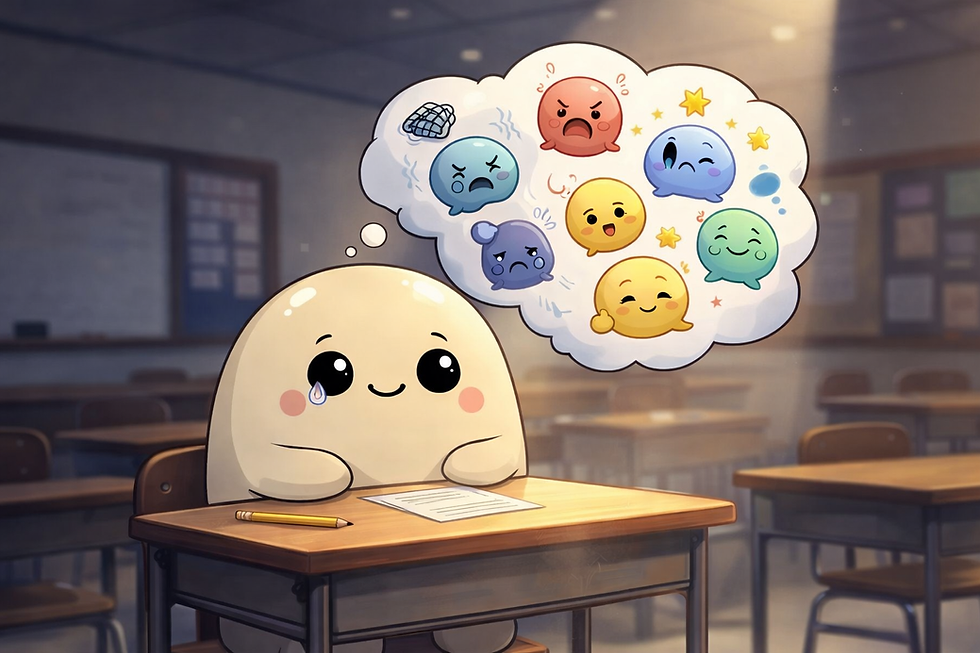
In an age where emotional intelligence and social connection play critical roles in children's development, the integration of music into educational frameworks has proven to be an invaluable resource. Enter Milmo, a carefully crafted musical character designed to foster social-emotional learning among children ages 4-11. But why is Milmo significant, and what prompted his development?
The Power of Music in Childhood Learning
Research from reputable organizations such as the American Psychological Association and the National Association for Music Education shows that music can help children process information more effectively. According to a 2018 study published in Frontiers in Psychology, music activities can enhance memory, attention, and even language skills in young children.
Music and Social-Emotional Learning
More importantly, music has a unique ability to support social-emotional learning (SEL). The Collaborative for Academic, Social, and Emotional Learning (CASEL) highlights that music can help children recognize and express emotions, develop empathy, and build positive relationships. A 2020 study from the University of Southern California’s Brain and Creativity Institute found that children who participated in music programs showed improved emotional regulation and social skills.
Why Milmo Was Developed
While these studies clearly demonstrate the benefits of music and songs for social-emotional learning, there are surprisingly few resources available that make this approach accessible and engaging for children. That’s why Milmo was developed,to fill this gap and provide families and educators with a fun, effective way to help children articulate their feelings and build emotional intelligence through music.
Milmo isn’t just a character; he’s a bridge to a brighter, more emotionally connected future for children. Milmo is not designed as an add-on to traditional SEL programs. Instead, it offers a different way of approaching social-emotional learning, one that centers regulation, predictability, and emotional acceptance as the foundation for growth.


Comments